History, philosophy, & Process

The artist
J. Ruel Martin is a 30 year self-taught woodworker, learning the craft little by little, as he could acquire the tools and skills. He began building furniture and cabinetry and years later found his first love, which now consumes him, of crafting wooden sculptures turned on his lathe.
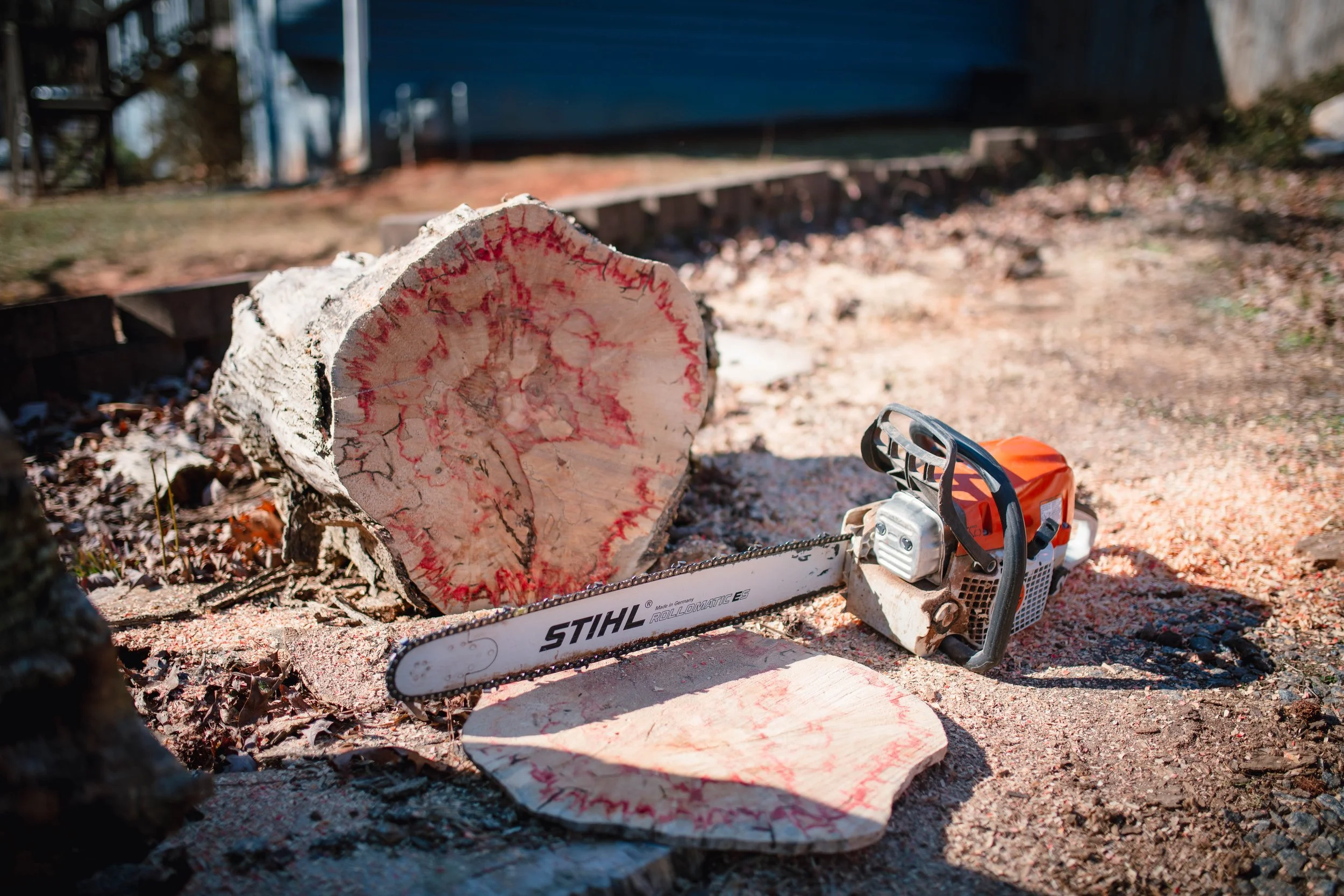
Ruel (an old family name) started turning simple projects 13 years ago on an old lathe gifted to him from a friend. He now owns several lathes, and has continually upgraded all his equipment in order to produce the level of work he is obsessed with. Ruel personally harvests all of the wood he uses from diseased, dead and downed trees across the southeastern United States and other parts of the country as he has ability to visit there.
Over the years, Ruel has been influenced by several master turners across North America and Europe but as of late, his inspirations are coming more from within giving his current focused work a distinct and unique character.
Ruel works out of his home shop in Acworth, GA where he lives with his wife, two daughters and a son. He has four older children pursuing their own lives as well and a growing brood of grandchildren.
He would love for you to come visit him at his gallery in Acworth, Georgia, just a 40 minute drive from Atlanta. You can contact him through the contact page in order to find a good time to come.




The process
“My process starts in a mindset and worldview. I believe that God created a world full of stunning natural beauty. Some of that beauty reaches upwards towards Him in worship in the form of trees. For 28 years, I have loved working with the medium of wood. I consider it my worship back to my creator to unveil the beauty hidden beneath the bark of a tree. I like to think that my work puts God’s creativity on display for discerning collectors to appreciate indefinitely. Hunting for specific types of trees, with certain types of growth patterns, is the only type of hunting that excites me. In particular, I look for downed trees in various stages of decomposition. The decay process, involving many of God’s lesser creatures, is an artistic expression all its own and much of the beauty in the pieces I turn, is the result of that expression. I gather logs that often weigh in excess of 3,000 lbs.
Once I have returned to my home shop, I cut the logs into manageable pieces. These, “manageable pieces” may weigh in excess of 300 lbs and require my tractor and an engine hoist to lift these pieces to the height where I can mount them on the lathe. Once mounting, I can begin to “rough” out the piece.
Roughing the form is one of my favorite parts. It’s where the tree gets to “speak”, as it were. I almost never start turning a piece with a commitment to a shape. As the bark and then outer layers of wood are removed, the grain of the wood, with its color and character tells me what shape it should be and sometimes, that I should change the orientation of the piece to better show of the beauty I am beholding. After achieving the rough shape, I can then hollow out the interior of the piece to prepare it for a long drying phase. From the point that I “rough” out the initial shape, many of my forms will be in “process” for well over a year before they are finished and ready to sell.
After the rough form is achieved, I force the piece of wood through a series of steps meant to manage how it loses moisture. Water in a tree is like blood in a human or animal. As it loses water, the wood is almost tortured as it shrinks unevenly, and begins to split and threatens to undo itself completely. I work with all the tricks I have learned to make the drying process do as little harm to the form as possible.
Some of my work is turned again after it dries out to work out any kind of warp it may have developed while drying, and other times, he turns from rough to finish in a single turning, allowing the natural movements of those pieces which often create more of a bespoke feel.
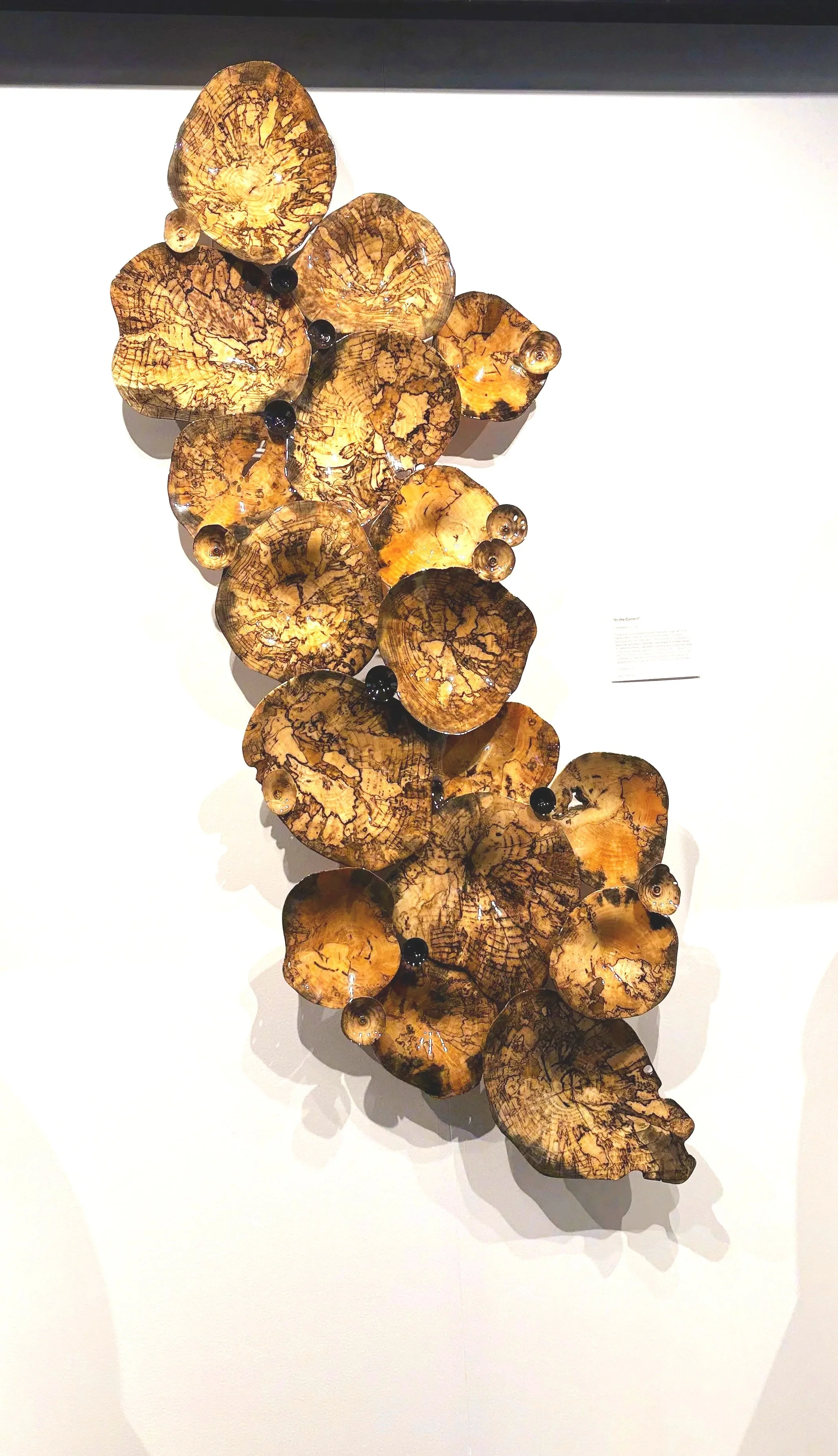
When the piece is dry, it is sanded and then a finish is applied. My highest end work is finished in epoxy resin, which provides a sort of permanence and a luxurious look that lifts the medium beyond craft, to art. This finish is extremely labor intensive but very well worth it. Other times, I use oils, lacquers or various acylic finishes on the more bespoke pieces. These pieces are typically much less expensive due to so much less time being spent in the process.
I continually learn new lessons as I work, but what I experience in the full, is worship. I thank God regularly for the ability to be able to do this kind of work.